Soviet surveillance and informing system
A Gentleman in MoscowSoviet surveillance and informing system operates in the novel as both an institution and a habit of attention: private conversations are overheard, staff are pressured to report, and personal flaws are assembled into files that can be used to control people. Its reach is most visible at the Metropol Hotel, where hospitality and political observation occupy the same rooms. The system’s apparent changes of name—from OGPU to NKVD, MGB, and KGB—do not mark a change in its underlying methods; the novel instead emphasizes its continuity and its ability to make everyday life serve as an instrument of state knowledge.
Institutions and Methods
The novel’s account of the secret police places the KGB at the end of a sequence of institutional replacements. The OGPU was established in 1923 to replace the Cheka; the NKVD replaced the OGPU in 1934, the MGB replaced the NKVD in 1943, and the KGB replaced the MGB in 1954. The narrative treats these successive acronyms as changes in administrative form rather than substance: the methodologies and intentions remain constant. Surveillance is therefore presented not as an exceptional response to a single crisis, but as a durable practice that survives shifts in the official organization responsible for it.
That practice relies on more than formal interrogation. At the Metropol, the little gray typist in a little gray building is charged with recording information collected by waitresses. He is also expected to secure their participation: he reminds them of their duty to their country, suggests that they could lose their positions, and resorts when necessary to more ominous implications. Their reports make public spaces available to the authorities, while the pressure placed on the women shows that informing is not simply a willing exchange of observations. Employment itself becomes leverage.
The typist’s work is deliberately distant from the life it records. He has never been to the Shalyapin Bar or dined at the Boyarsky; his experiences are secondhand, and his task is to relay data to superiors without embellishment. He has perfected a style of restraint, suppressing insight, wit, metaphor, and analogy. The contrast is pointed: the more disciplined the report’s surface, the more it conceals the coercion and human encounter behind its production. His typing continues during a citywide blackout, even with his eyes closed, until a stumble makes his fingers shift one column to the right and renders half the report unintelligible or, from another perspective, coded. The small error exposes the fragility of a system that presents its written record as orderly and objective.
The Hotel as a Field of Observation
Surveillance enters the hotel through ordinary social roles. A waiter is expected to overhear; a capable servant notices a guest’s unspoken need; staff observe behavior as part of their work. At a state dinner, Count Alexander Ilyich Rostov serves courses, refills glasses, replaces utensils, clears plates, and sweeps crumbs while the guests speak privately around the table. The narrative insists that he hears every word. His knowledge comes not from a hidden device but from the position of the attentive server, a role that makes listening both practical and unobtrusive. The same service environment that enables discretion also creates an opportunity for observation.
The novel links this everyday permeability to the work of the state. While the dinner guests make asides and confer across the table, the typist records the information supplied by waitresses elsewhere in the city. When the lights fail, he keeps typing; his task continues even as clocks, radios, and televisions stop and the hotel’s occupants react to the darkness. The juxtaposition makes surveillance seem at once mundane and unsettling: the public spectacle is interrupted, but the machinery of reporting carries on.
Hotel hierarchy also shows how political change is enforced through speech and conduct. When the manager tells Count Alexander Ilyich Rostov that staff have continued to address him as Your Excellency, he insists that they refrain from using the honorific because the times have changed. The Count reassures him that times change and gentlemen change with them. The exchange is not itself an episode of secret reporting, but it shows how the new order monitors visible signs of status and requires staff to adjust their language. Political power reaches into the small rituals by which people recognize one another.
Files, Investigation, and Inference
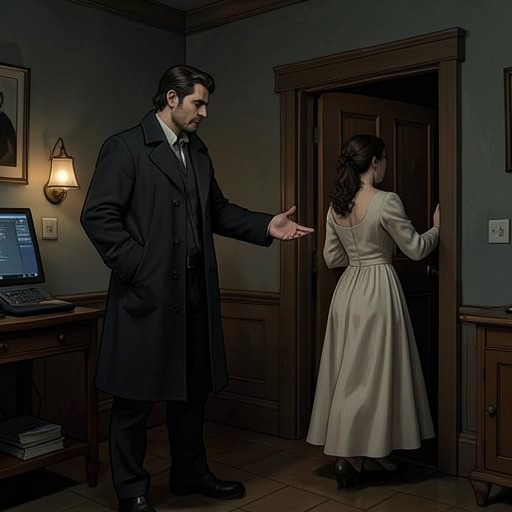
The system’s most concrete archive appears when Count Alexander Ilyich Rostov opens the Bishop’s filing cabinets. The first three contain operational reports on revenues, occupancy, staffing, maintenance, inventories, and discrepancies. The remaining cabinets hold files on individuals: guests and hotel employees, including Arkady, Vasily, Andrey, Emile, and Marina. These records catalogue specific instances of tardiness, impertinence, disaffection, drunkenness, sloth, and desire. The facts need not be fabricated to be coercive. The files select and preserve weaknesses while excluding the virtues that would give a fuller account of each person. Count Alexander Ilyich Rostov finds his own file among the thickest, a measure of how thoroughly an individual can be converted into an administrative object.
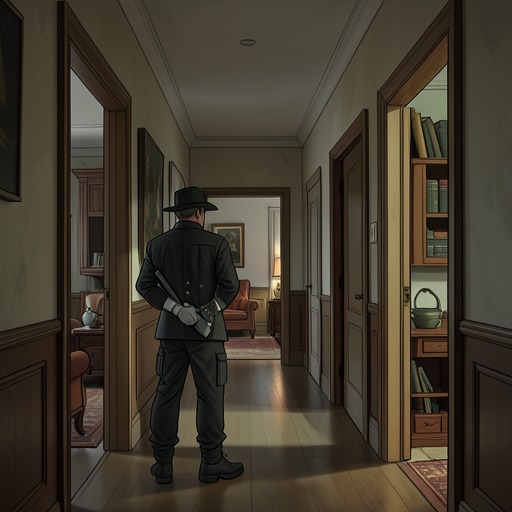
The KGB’s search for the missing headwaiter demonstrates how those records and habits of observation become active investigation. At half past eleven, two officers arrive at the Metropol to question Alexander Rostov about an undisclosed matter. He is absent from his sixth-floor room, the barbershop, the Piazza, and the lobby. Chef Zhukovsky and Maître d’ Duras are questioned; at one o’clock, two more officers are called in to widen the search. The senior investigator then questions Vasily, the concierge, at his desk while Vasily is arranging theater tickets for a guest. Even the manager’s failure to report for work is noted in his file. The investigation folds routine workplace facts into a political record, treating absence itself as information.
The search also reveals the limits of official control. Staff read the officers’ gestures, language, and expressions, and infer that Sofia has gone missing in Paris. Andrey asks whether their friend might have escaped as well; Chef Zhukovsky rejects the possibility. The rumor does not originate in an official announcement but in small signs that the hotel’s employees interpret among themselves. Surveillance thus produces a countercurrent of observation: the staff watch the watchers, trying to determine what the authorities know and what has happened beyond their reach.
Continuity and Narrative Significance
By placing the typist, the personal files, the waitresses, the KGB search, and the hotel’s service rituals alongside one another, the novel depicts surveillance as a system assembled from many kinds of labor. Some participants collect information under pressure; others preserve it, classify it, or act on it. Still others learn to read gestures and silences because direct knowledge is dangerous or unavailable. The result is not omniscience. Reports can be mis-keyed, files can distort by omission, and rumors can remain uncertain. Yet the system remains powerful because even imperfect information can prompt questioning, search, and fear.
The hotel sharpens this account by making observation part of ordinary proximity. Guests speak while waiters serve; employees pass through rooms and corridors; a concierge attends to a visitor while an officer asks questions. What might otherwise appear to be a private exchange is never wholly separate from the possibility of being overheard, written down, or reinterpreted. The surveillance system’s most enduring force lies in this overlap: it turns everyday attentiveness into potential evidence and makes uncertainty about who is listening part of daily life.